Choose for your actual routes
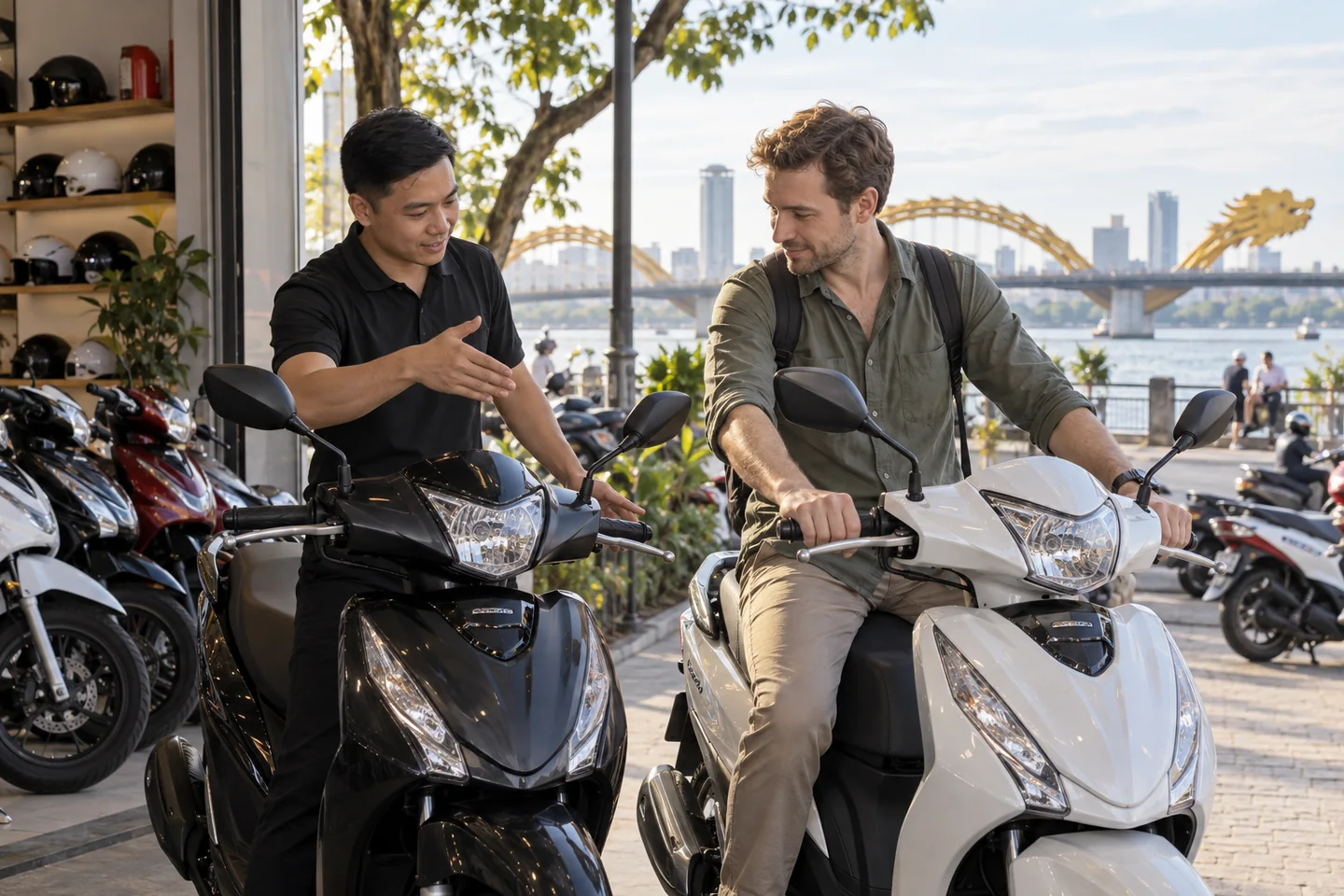
Urban commuting, a passenger and trips into hillier areas place different demands on a bike. Check that you can place your feet securely, turn at low speed and operate both brakes comfortably.
Look beyond polished bodywork
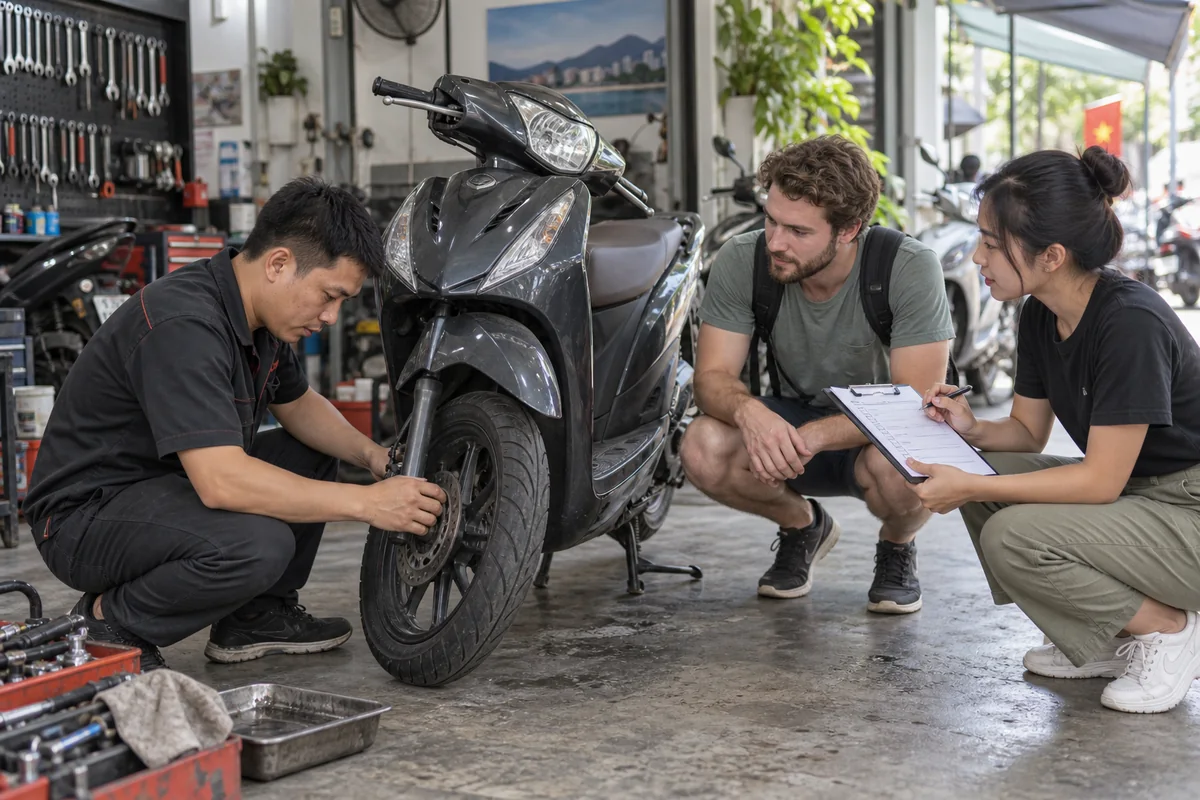
Inspect tyres, brake components, fasteners, connectors and signs of water beneath the seat. Ask how and where the bike was stored and verify the answer through condition, not presentation.
Finish the standard deal checks
Match the bike, documents and seller, confirm cleared payment yourself and verify current riding requirements before using the bike.
Define the Da Nang use case before choosing a model
List the journeys the bike must handle during a normal week: short errands, commuting, carrying a passenger, luggage, evening riding or trips outside the central area. Note where it will be parked and whether a workshop familiar with the exact model is reasonably accessible. This turns broad advice about “the best bike” into a testable shortlist. A light, familiar scooter may suit dense daily use, while another route or load may justify different ergonomics and performance. Choose only after sitting on and controlling the actual bike.
Set a total budget that includes inspection, immediate safety work, routine service, tyres, battery, protective equipment, secure storage and possible transport. Keep a reserve for findings that cannot be priced from photographs. Compare the same model, approximate year, document position and condition; otherwise the asking prices are not meaningful peers.
Screen the advert without sending a deposit
Save the original listing and ask for current daylight photographs of both sides, controls, dashboard, tyres, under-seat area and every disclosed defect. Request a cold-start video only as a screening aid. It can show access to a bike and an obvious symptom, but cannot establish identity, ownership or mechanical health. Keep full frame, engine and personal identifiers out of public messages.
Ask for the exact variant, approximate mileage, service history, number of keys, known repairs, document inventory and reason for sale. Write “unknown” where the seller does not know. Honest uncertainty is more useful than a confident answer that cannot be supported. Stop before the meeting if the location or bike changes unexpectedly, the seller refuses basic questions, or payment is required to reserve the viewing.
Inspect for storage, rain and everyday wear
Meet in daylight at a place where the bike can be examined safely. Ask the seller not to warm it. Before starting, look for leaks, damaged fasteners, uneven panel gaps, steering alignment, fork condition, tyre wear, brake condition and corrosion around exposed fittings. Check under the seat and around electrical connections for signs of water, poor repairs or neglected storage. Surface corrosion alone does not diagnose internal damage; it identifies areas for closer inspection.
During the cold start, observe starting effort, idle, smoke, warning lights and unusual sounds. Test lights, horn, instruments, locks, steering, suspension and both brakes. Ask an independent mechanic to interpret symptoms and separate safety work, scheduled maintenance and cosmetic issues. A short viewing is not a substitute for workshop inspection when the price or uncertainty is material.
Only ride when permission, legal entitlement, insurance, a safe route and protective equipment are clear. Test low-speed balance, braking and predictable response rather than speed. If those conditions are unresolved, let a qualified person operate the bike in an appropriate setting.
Check the transaction as a separate track
Compare the physical identifiers with the available originals and the seller's authority. A good inspection does not solve a document discrepancy. Ask the relevant official channel which current process applies to these parties and this bike. Record the source and date instead of relying on an old post or a broker’s assurance.
The written handover should identify the parties, bike, known faults, documents, keys, accessories, price, payment method and exact transfer time. Confirm cleared funds through your own banking channel. Never disclose an OTP, install remote-access software or accept a screenshot as settlement. If an intermediary holds an original, require a clear purpose, inventory, deadline and receipt.
Plan the first week
Arrange secure parking and the initial workshop visit before collection. Transport the bike if a safety issue makes riding inappropriate. Keep the inspection, inventory, payment evidence and service record in a private folder. Recheck tyre pressure, brakes, lights and controls after maintenance, then learn the bike on familiar routes before adding a passenger or luggage.
Review the decision the following day if the seller allows time. Compare the candidate with the written shortlist, not with memory of the meeting. Reprice every confirmed repair and mark every unanswered question. Weather, traffic or travel schedules can make a viewing inconvenient, but they do not justify skipping identity, document or brake checks. If the seller changes a material term after inspection, update the record and reconsider the entire deal before paying.