Describe the route honestly
Dense city traffic, mountain roads, luggage and a passenger demand different skills and equipment. Choose a bike you can control confidently at low speed and while stopping, not the most powerful option available.
Check the support around the bike
Ask about common parts, service availability and breakdown arrangements. Inspect tyres, brakes, lights and protective equipment. Confirm the licence and insurance conditions that apply to you before any test ride.
Keep time pressure out of the deal
A departure date is not a reason to skip inspection or send an unseen deposit. Keep the agreement, payment and handover record in writing.
Design the journey before selecting a bike
Map the longest and most demanding days, not only the first easy ride. Record expected distance, road type, gradients, traffic, luggage, passenger plans, fuel and service opportunities, overnight storage and realistic rest stops. Add alternative transport for sections the rider or bike should not attempt. A model that is convenient in a city can be uncomfortable or difficult to service on a longer itinerary.
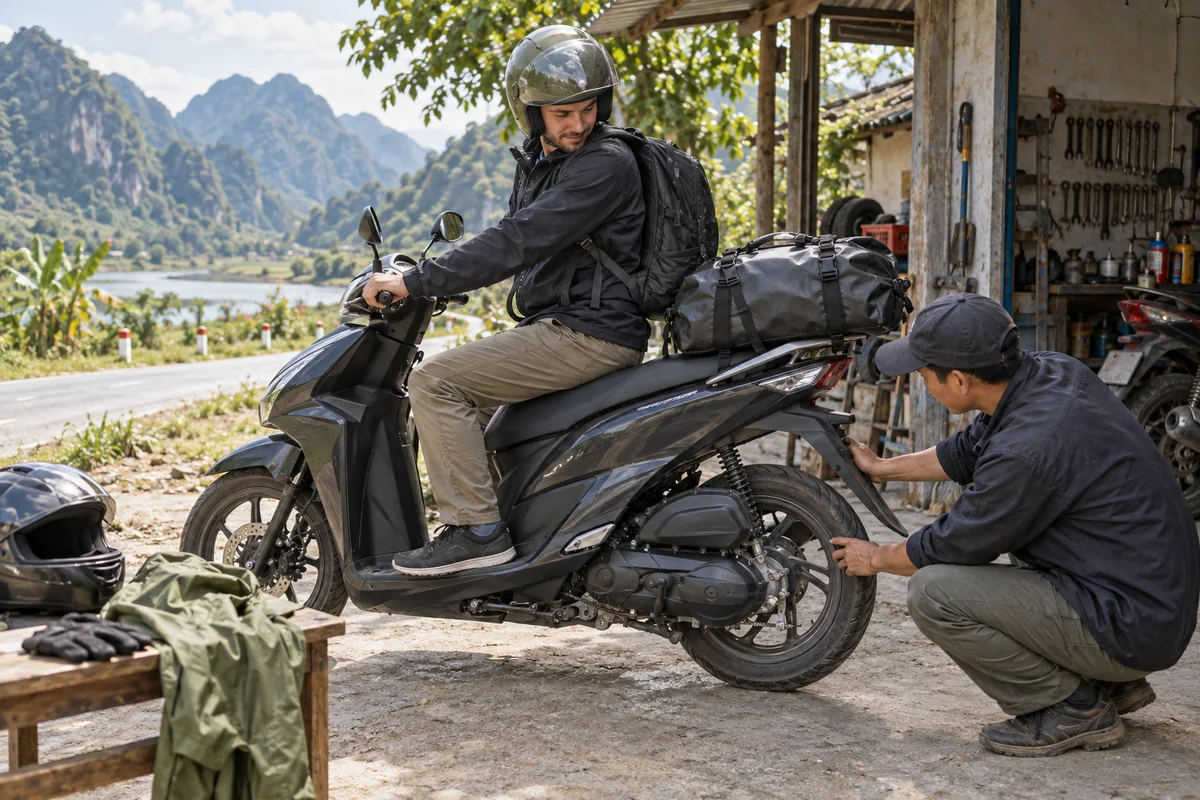
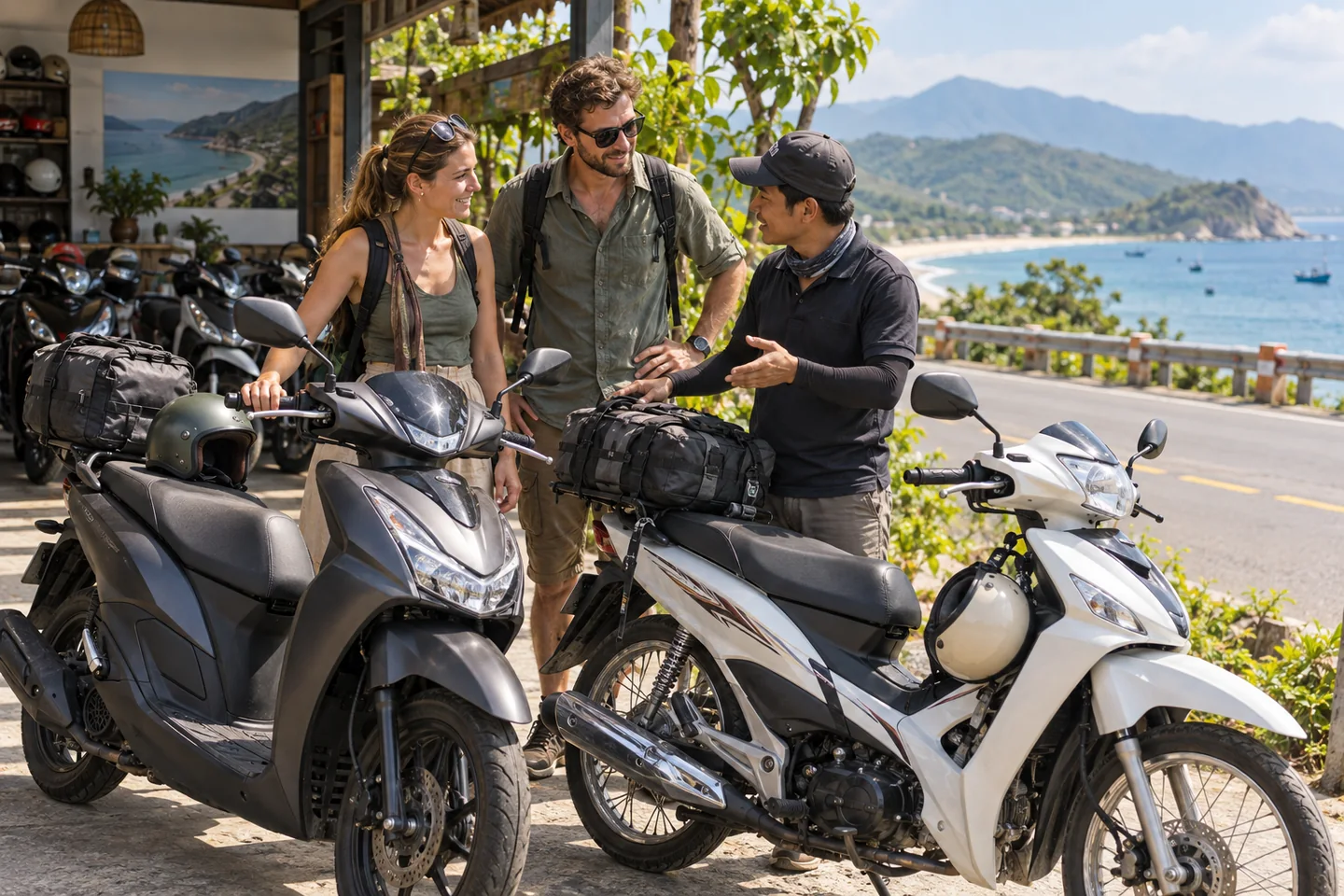
Assess rider experience honestly. Include low-speed control, braking, wet conditions, unfamiliar traffic, carrying luggage and fatigue. Choose a bike whose weight, seat, controls and power delivery remain manageable at the end of a long day. Sit on the actual candidate, manoeuvre it while stopped and test luggage placement without blocking lights, steering or access to controls.
Confirm the legal and insurance position
Prepare the exact vehicle details and rider credentials for an official check. Ask which licence category applies, whether the held documents are recognised, which registration evidence must be carried and how insurance responds to the planned use. Save the authoritative source and date. Requirements may depend on the rider, vehicle and current rules, so a traveller's old report or an operator's assurance is insufficient.
Read the policy terms and exclusions rather than relying on “insurance included.” Record emergency contacts, claim steps, documents required after an incident and any limits related to route, rider or vehicle. Make copies available securely during the journey without publishing personal identifiers.
Build a travel-specific shortlist
For each candidate, capture exact model and variant, year, displayed mileage, service evidence, tyres, brakes, suspension, lights, charging, storage, number of keys, document inventory and known damage. Check whether common consumables and competent service are accessible along the route. Rare accessories are less useful than predictable maintenance and a clear history.
Set a total budget for inspection, immediate service, protective equipment, luggage mounting, locks, secure parking, transport, breakdown recovery and a reserve. Do not spend the reserve on cosmetic upgrades. Compare equivalent candidates and treat every unsupported history statement as unconfirmed.
Inspect for sustained use
Meet in daylight with an independent mechanic and request a cold engine. Before starting, inspect tyres for age and damage, brakes, steering, fork, suspension, leaks, chain or transmission condition as applicable, fasteners, wheel alignment, charging connections and previous repairs. Ask whether any wear could worsen during the planned distance and what maintenance interval will arise during the trip.
Observe starting, idle, smoke, warning indicators, cooling behaviour and unexpected noise. Test horn, lights, instruments, locks and charging equipment. A brief test cannot reproduce a full travel day, so use service evidence and a qualified inspection to reduce uncertainty. Separate work required before departure from routine maintenance that can be scheduled.
Ride only with permission, confirmed legal entitlement, insurance, protective equipment and a safe route. Check low-speed balance, braking, tracking, smooth response and comfort. Stop if the bike, traffic or rider condition makes the test unsafe. A more powerful model does not compensate for poor control or fatigue.
Prepare for problems before departure
Create a daily pre-ride check for tyres, brakes, lights, leaks, controls and luggage attachment. Carry only suitable tools and approved spares that you know how to use. Record service locations and a transport or recovery option. Do not attempt roadside repairs beyond your competence, especially on brakes, steering, tyres or fuel systems.
Share the route and check-in plan with a trusted person while limiting public location details. Keep emergency, insurer and workshop contacts available offline. Adjust or stop the journey for severe weather, fatigue, illness, unsafe road conditions or a developing mechanical symptom. Schedule margin days so safety decisions do not threaten a fixed flight or accommodation plan.
Complete a documented handover
Independently compare the bike, originals and seller authority. Record known faults, keys, documents, luggage equipment, price, payment method and transfer time in a form both sides understand. Confirm funds through your own banking channel and agree what happens if an official step cannot be completed. Secure parking and the first service should be arranged before collection.
After purchase, take a short familiarisation period before starting the main route. Load the bike gradually, recheck attachments and revisit the workshop if handling changes. Preserve inspection and maintenance records for later decisions and resale.